The article which has just been published in Danish continues the history of Gartnergade Corps with a view of the situation of the corps during the German occupation of Denmark from 9 Arpil 1940 to 5 May 1945. It tells of how the corps coped with this challenging situation.
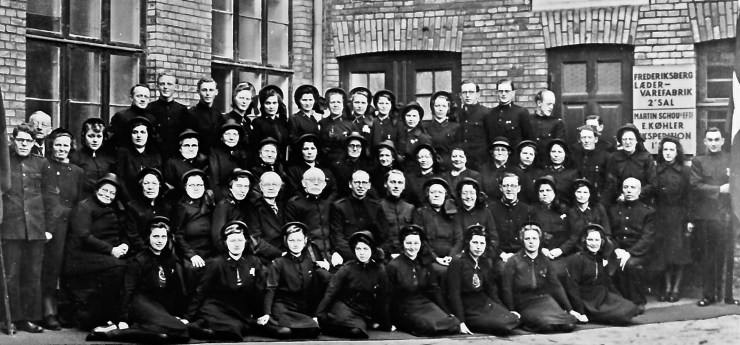
The first impression from reading the corps history book is that life to a great extent went on as usual, but then in between the reports there are small comments concerning the special situation, as for instance a remark on 10 April 1940 that a lot of people gathered for the united holiness meeting in spite of the situation with blackout curtains that were imposed the previous day. A number of comments during the war concerned the schedule of Sunday meetings especially the Sunday evening meeting. Firstly it had to be moved forward to 19.30, later meeting times changed according to circumstances, a period to 18.00 or to 16.00 in the afternoon when curfew was imposed. Sunday evening marches and open air meetings seemed to be taken off the program, at least a comment in August 1945 expressed the joy that it was now possible again to have both march and open air meetings. Smaller open air meetings were held, as the ones the young people and other youth workers held Sunday morning in the courtyards in the neighbourhood in order to evangelize and announce the meetings during the day. Similar meetings were also held before the Sunday school in the afternoon. At these the youth workers often formed a little march back to the corps, a march the children from the yards would follow and participate in.
Air-raid warnings would interrupt meetings, especially during the last two years of the war, and there would often be 2-3 warnings during an evening or night. The situation of the rising price of fuel was a constant challenge for the corps and the soldiers made a great effort in raising money for this.
In august 1943, when the Danish government resigned and the Nazis took full control over everything, the whole situation worsened. The general strike in the summer of 1944 tightened things even more. These changes are not really mentioned in the corps history book only implicitly by the effects, as for instance the effect of a curfew or when the corps leader suddenly dissapeared in December 1944 with his family. He went underground as the situation became dangerous for him. Nobody knows if he was part of the resistance, we only have the facts and some correspondance from THQ.
It is amazing how the corps tried to keep up full programs and held festive gatherings with coffee, cakes, desserts, soft drinks, sandwiches etc., often in order to raise money for the corps, especially the fuel cost. The people of the distirct really came in big numbers for these occasions. How the corps got hold of all the ingrediens for these gatherings does not appear in the records, but it must have costed time and creativity to make all this in a situation of shortage and substitute. The corps even managed to serve a special dinner for 100 elderly and poor people with a full dinner of roasted pork, dessert, cakes and coffee as part of its 50 anniversary.
The corps had from its beginning been an integrated part of this working class district, they were themselves workers and artisans, so they were neighbours and workmates and were well repected. People trusted the Army people and were welcoming towards them when they visited or when they marched the streets or had meetings in the courtyeards. So there was also economic support for its work. The shop owners would support the different arrangements with goods from their shops.
Community singing became a real feature during the war. People gathered in great numbers all over the country in the open-air or in community halls in order to sing together, mostly national hymns and other Danish songs. It starterd very soon after the occupation as a form of resistance towards the German authorities. The Army took this community singing up very soon and from the history book it is evident that the corps had many gatherings with this focus. The people of the district would come in great numbers for this. The national, the country, the language, the Danish culture became very important and so did the King and the royal house. (The King would ride through Copenhagen on his horse every day as a symbol of national solidarity).

En søgende ved bodsbænken i Gartnergade korps
The rising numbers of people in the Army hall would not only be for these special occansions. It is evident from the corps records that the attendence for Sunday meetings rose, as did the number of people who came to the Mercy Seat for prayer. A number of passive soldiers renewed their vows and became active again.
In this present time of the Corona pandemic people here in the country again gather for community singing, but not standing together as during the war. They are in their homes and follow the community singing which is on TV every morning at 9’oclock. Windows might be opened for this. In some neighbourhoods people open their windows and go out on the balcony in order to sing together in the evening to create fellowship in spite of keeping distance. As meetings and services are cancelled there are no rising numbers for services, but very many follow them on-line.
Youth fellowship and its gatherings during the occupation
The youth fellowship in Gartnergade decided to write a journal of minutes from the meetings and other gatherings 8 February 1943. They gathered from 20-40 young people every Monday evening. The youth group also were in charge of the praise meeting every Sunday afternoon at 15.30, so there are minutes from these meetings as well. The journal draws a picture of a vibrant youth group where most of them were soldiers in the corps and very active in the youth work. It gives an insight to everyday life for young people during this time.
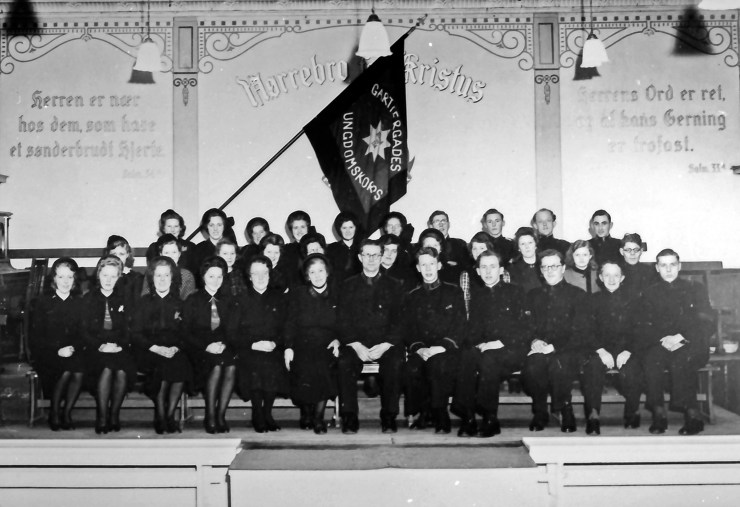
Like the corps history book it shows how life continued in a normal pace with fun, celebrations, time of reflection, devotions and songs, but in between the glimpses of the war can be seen, how they responded during air raids or times of curfew. They seened to stay in the hall or seek back to the hall when an air raid was on, there are comments of returning home during the night, because of several air-raids during the night. A number of them had to rush to hospitals or other places where they would be on duty during the raids and after. There are comments about their bikes or lack of bikes when going on outings with the group. The bicycle tyres were of poor quality, so they would flatten every so often.
The programs of the youth fellowship were varied and well planned. In between they had ’letter evenings’, where they recieved letters from other corps in the country, or cadets on field training and sometimes from Norway and Sweden from leader who had been Territorial Commanders in Denmark. All these letters were read during the evening and then sold on auktion. Apparently they were popular. It is evident from the journal that there was a focus on the national, slides from around the country and then silence and reflections, when a picture of graves of soldiers who had given their life 9 April 1940 when the Germans crossed the borders of Denmark. They were aware of the occupation and its consequences, but tried to live their lives as best they could.
During the summer from mid-May to the end of August they would gather outside in parks, at the seaside swimming (Copenhagen is by the seaside so there are many beaches), outside the city in the great forests etc. There are descriptions of how they got there with tramps and busses…. and walking long distances.
There would be a lot of games as well as handball and other ball games. Whereever they would be there would be closing devotions and songs. These devotions are reported in details, so are the songs. It makes it possible to see which songs they would chose, and from this to see which ones would be on the program nearly every time they gathered. Often when they took a train they would fill a wagon and there would be singing all the way. They also held outings for a whole day on bank holidays. At such one they went north of Copenhagen to a rather large lake, where they hired rowing boats. They were singing while they were sailing, as the corp leader had brought a concertina and two of the young people mandolins. All the reports are written in a way that it is possible to image this lively youth group.
Conclusion
It has been quite strange in this time of the Corona pandemic, where we have to live through massiv changes and restrictions, and in a similar way adapted to the situation, to look into the written records of the corps during the time of occupation and war. The situation of the country changed from one day to another by the occupation, and the population had to adapt to new challenges and restrictions. It is evident that the corps tried to live out its mission and keep up a normal program as far as possible. It is also clear that it went to great efforts to celebrate significant days and church festivals, to join the movement of community singing and to invite the neighbours and people of the district, young and old, to special occasions that would lighten up the situation of restrictions, want and uncertainty.
/One of the Russian readers of the articles in salvationistfaith.com has started reading the Danish articles with the help of Google translate. I expect there will be some interesting misunderstandings, but it most probably gives an idea or overview of the the article)
 Salvationist viewpoints
Very, very interesting ( and challenging). The efforts to hold on to a certain “normality”, especially for the younger generation, is impressing.
LikeLike