
The Nordic countries of Europe have been Lutheran countries since the Reformation in the 16th Century. Because of the strong adherence to the King and subsequently to the state these churches became dominating state churches. When national identity developed and became a strong feature membership of the State Church became part of this identity, one of the consequence was that in order to be regarded as proper Danish, Norwegian, Swedish or Finnish membership of the Lutheran State Churches was considered to be of greatest importance. The idea of a state religion is seldom connected to religious freedom and liberal, modern and democratic states. Nevertheless, such a situation existed in Norway until 2012 when the Lutheran Church ceased to be the State Church of Norway. A large majority of the population belonged to the church, even though the percentage in 2013 had fallen to seventy-five. The relationship between the church and minority religious movements demanded adaptation and compromises from minority churches.
The dominating position of the State Church shaped the religious life in the country not only by having the vast majority as members, nominal or not, but also by its close adherence to Stortinget (the parliament) on behalf of the king. § 2 of the Constitution of 1814 of Norway stated: “The Evangelical-Lutheran religion will remain the official religion of the state. The citizens who adhere to this religion are under the obligation to educate their children in the same religion………” In 1964 §2 was altered so it now began with stating freedom of religion: “All citizens of the country will have freedom to exercise their religion …” and continued with this about the Evangelical -Lutheran religion as the official religion of the state. The constitution was changed 21 May 2012. Dissenter laws came into being in 1845 and 1891 which gave religious freedom. A Non-Conformist Act of 1969 gave better conditions for faith communities and they were no longer called or seen as dissenters. Conflicts concerning matters of faith were not internal matters within the church, but became public matters where Stortinget’s Church Department became involved and made final judgments. For example did a conflict in 1953 concerning belief in eternal perdition, which was the focus of a radio sermon by Professor and leader of the Home Mission Movement, O. Hallesby escalate in the public room. The message of the sermon was challenged by one of the bishops, Kristian Schjelderup, whereby his position as a bishop was questioned, because his opinion was considered outside the faith of the church. The process involved judgments from a professor in Constitutional Law as well as from the Theological Faculty, and the verdict was that the bishop had not violated the faith of church concerning this matter and could stay as a bishop and guardian of the faith. Professor Hallesby and other conservative Christians did not agree with the verdict. Situations like this one had an impact on the religious life not only for State Church members, but also for the dissenters, as they had to relate to a sort of official faith of the state. The State Church or the State Religion was the one setting the agenda for religious teaching and religious truths. The small dissenter communities were challenged by the agenda set by the church as all had to relate to the church in some way or another, because of its dominance.
Towards the middle of the century the designation, the Norwegian Church became usual instead of the State Church. The name itself implied that there was only one church in Norway and signaled the dominance of the church in religious life in the country. The Non-Conformist Act of 1968 did not use the word church for the dissenter congregations, but had the designation – faith community – as a common description for religions outside the Norwegian Church. This use of language narrowed the concept of church down to be identical with the Norwegian Lutheran Church. For ordinary people the word church would always in everyday language mean the Norwegian Church.
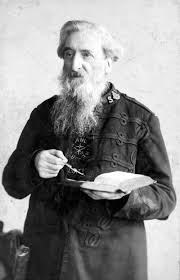
Frelsesarmeen[1] never called itself a church, rather a movement, an Army, an organization with the aim of proclaiming salvation and holiness, form corps communities where Salvationists would be taught and trained as disciples of Christ, and involve itself and its members in serving people in need and giving voice to the voiceless. In avoiding to call itself church it followed not only Norwegian custom, but also Salvation Army tradition, as during The Salvation Army’s history there had been a resistance against not only using the word church, but also using the concept of church when describing the Army. The following words from William Booth had lasting influence: “It was not my intention to create another sect….We are not a church. We are an Army, an army of salvation.”[2] Church was identified with a formal, inflexible institution representing sacerdotalism and sacramentalism, the opposite of what the Army wanted to be. It wanted an image of informality and flexibility to be easily mobilized and conveying the gospel in a simple and direct way. Even though Bramwell Booth in 1925 made the following claim the Army remained reluctant to describe itself as a church:
“Of this, the Great Church of the Living God, we claim, and have ever claimed, that we of The Salvation Army are an integral part and element – a living fruit-bearing branch in the True Vine.”[3]

Bramwell Booth stated that the Army was an integral part and element of the Church of the Living God and connected to the Church, while avoiding calling the Army a church. The international Mission Statement which came into use in the early 1970s struck a similar note as it stated that: “The Salvation Army, an international movement, is an evangelical part of the universal Christian Church…..”. It is a part of the universal Church, rather than stating that this part is a church.
This inspiration coming from the international Army fitted well into Norwegian Salvationists’ concept of ‘church’. Frelsesarmeen was something different from the church, a movement or an organization. The church was the place for rituals and rites of passage common for nearly all Norwegian citizens. It stood central in Norwegian society as a symbol of a thousand year long tradition of Christianity their forefathers had adhered to. The overall rite was baptism of infants. Here the child got its name and was entered into the church’s protocol where all the names of the family many generations back would be.
For ordinary Norwegians including Salvationists the Norwegian Church would identify what a church was. The close affiliation to the state was considered a natural part of being a real church which people were connected to through ceremonies and rites at important stages in life. By using the word dissenters for those outside the church for more than 120 years signaled how strong the tradition for membership was. It was the norm to be members, those outside the church were dissenting from this norm and tradition. When introducing the concept ’faith community’ in the Non-Conformist Act of 1969 the language described the nature of the communities included in the law. It no longer underlined abnormality, but gave the groups an identity grounded in faith. It could be the Christian faith, the Mosaic faith or any other faith expressed in different religions. This situation where the concept of faith was underlined in the name of these communities made them stand apart from the church. The church in the minds of ordinary people did not necessarily focus on faith, at least not a personal faith. What was important was membership or belonging and then making use of the rituals the church offered. Because of this situation the question of the State Church as an expression of civil religion has been relevant to evaluate within the context of theories of civil religion. Especially Salvationists’ affiliation to the church is evaluated in this connection to see if they implicitly considered the Norwegian Church as an expression of civil religion in the country and if this adherence was a way of accommodating to the Norwegian society [4]
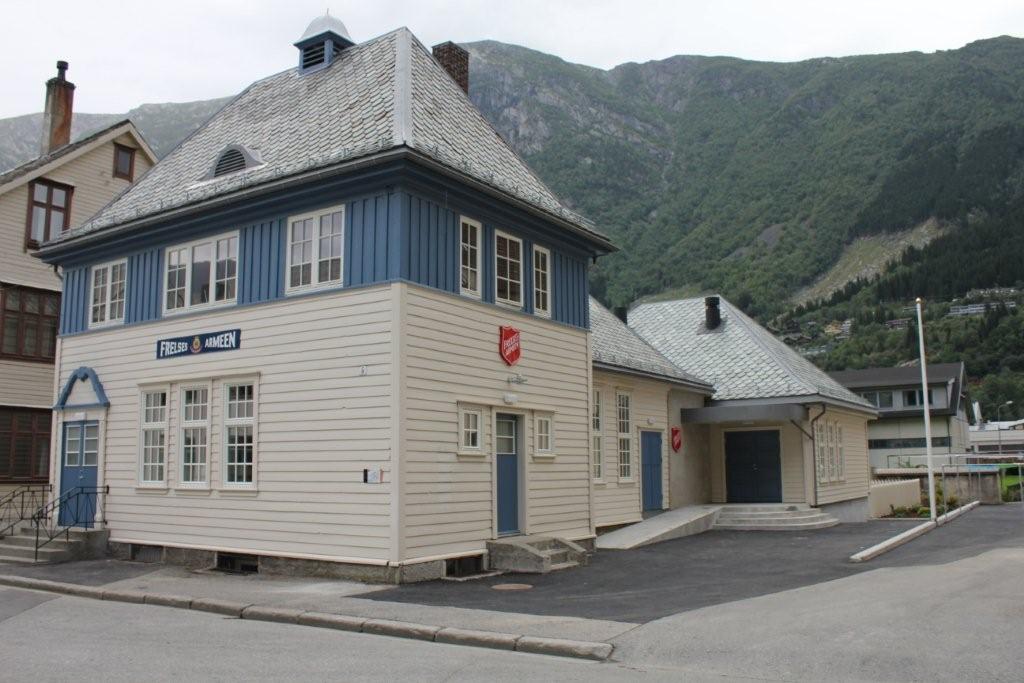
The identity question was important in connection to Salvationists’ search for their own church identity as well as their nominal membership of the State Church. Seemingly it had been unproblematic for Frelsesarmeen’s leaders that Salvationists had double membership, as long as the Norwegian Church was a state church while a separation between state and church would alter the situation. The opinion that Frelsesarmeen would have to register as a faith community in case of a separation between state and church was a continued discussion for 30 years. This argument is another reason why the question of considering the State Church as an expression of civil religion has been relevant. This mixture of state and church blurred the concept of what it meant to be church and opened up for a possibility of seeing the church as an expression of civil religion, which Norwegians adhered to through their membership of the church.
Historical analysis and interpretation, especially by the Finnish researcher Susan Sundback[5], have revealed that the folk churches in the Nordic countries have had a civil religious function for the Nordic people and were centers in a civil religious culture, even though the situation of the Norwegian Church was more complicated. This was due to the split at the end of 1800 with a strong and growing Norwegian and popular pietistic Christianity as an opposition to the State church that hindered the development towards a civil religious consensus more than in the other Nordic countries, but during the last decades the church in Norway has expressed a more general Nordic situation. The overall view of the Nordic folk churches was that they expressed pragmatism toward different issues in society showing a great deal of adaptation to the new developments as well as being theologically liberal. By this they kept the support in membership by the majority of the population. By including the adaptation of the church to society, Susan Sundback gave reason for civil religion still to be an issue within the Nordic countries including Norway.
Norwegian research by Inger Furseth[6] and Pål Repstad[7] has shown that civil religion in low key could be seen within the Norwegian Church as there were elements of civil religion present, but “That civil religious perspectives are mainly reserved for the religiously active”[8]. The political elite had changed from hostility, or indifference, towards religion, to a wish that the inclusive folk church would move in the direction of civil religion, because that was seen as liberal and tolerant and could serve as a barrier against more sectarian religious movements. For the Social Democrats the welfare state also needed to provide religious welfare at critical stages in people’s lives. The folk church seemed to meet these needs.
From research concerning Frelsesarmeen a question has arisen as to whether a concept of civil religion has been implicitly present in Salvationists’ view of the Norwegian church and their own adherence to the church. The first clear expression of such a situation could be seen during the years 1900 – 1910, where officers [9] regained their membership of the State Church which they earlier had resigned[10]. This change coming at the end of nation building and with independence from the union with Sweden seemingly had to do with the wish to be counted as proper Norwegians. There is no indication of any faith reasons for making the change, but a strong wish to accommodate themselves to their society. The next clear expression of such a view came when two commissions within the Norwegian Church during the years 1965-1973 evaluated the situation of the church and had focus on its identity as a Lutheran church. The leadership of the Army, especially Commissioner Karsten Solhaug followed this very closely and called for the Army to make its own commission to evaluate its situation. What really made the Army start its own evaluations with Frelsesarmeen’s Commission 1975-78 was when the final report from the State/Church Commission came in March 1975 with its majority recommendation of a separation between state and church. Solhaug and a number with him could not imagine Salvationists being members of a Lutheran Church, if it was separated from the state. Seemingly it was the relationship to this state institution or state religion that was considered natural for Salvationists to adhere to. I interpret this as an expression for implicitly considering the Norwegian Church as an expression of civil religion.[11]
I have interpreted Salvationists’ membership of the Norwegian Church as an adherence to the culture and customs of the country, to civil religion in order to be proper Norwegians. However, the Norwegian Church is more than culture, customs, and civil religion. It is a church and has an ecclesiology that has implicitly influenced Salvationists and their understanding of church. The reports from two Frelsesarmee commissions, Frelsesarmeen’s Commission 1975-78 and Frelsesarmeen’s Church Commission 1993-96 revealed such an influence as they described Frelsesarmeen’s ecclesiology. The issues were spiritualistic Christianity and the invisible church. In the minds of the two commissions these two became connected. Professor Bloch-Hoell from the Theological Faculty was invited to present a paper for the first commission in 1975. The impact of this paper was long lasting. It concerned his label of the Army as an expression of spiritualistic Christianity, which he considered dangerous and indicated by the Army’s non-observance of the sacraments. He explained what he meant with spiritualistic, a presumption that material things and physical phenomena in themselves had no real spiritual significance. He did not expand this further. Presumably it was just to place the Army in the ecumenical landscape and call attention to his understanding of the dangers of Christianity without the sacraments. The description of the Army as spiritualistic, without broader evaluation, allowed for some misunderstanding by the commission. The members simply took hold of this label without further reflection and connected it to the idea of the invisible church. A discussion or dialogue that had connected this to some of the Army’s roots instead never took place. Such a discussion could have concerned the Army’s belief in the baptism of the Holy Spirit as the essential baptism, or perhaps the pneumatological roots of some of the Army’s teaching, or the influence of these roots on the founders of the Army. It could be an influence from the Quakers amongst others. They are considered more implicit than explicit.[12]There was some influence, but the spiritualistic label that Bloch-Hoell gave the Army could hardly stand alone in light of how strong a practice the Army employed in developing outward and visible signs of grace. A contemporary of William Booth noted how ironic it was that the Army, which placed such en emphasis on drama/symbol and action, abandoned the sacraments:

“The whole character and nature of the Army, all its methods of action, would lead one to expect that it would be strongly sacramental. To anyone who understands the nature of the movement, it must come as a surprise, that the leaders do not lay stress on sacraments. They lean much upon externals and ritualism; they believe tremendously in their place and position, one would expect them to go on to the sacraments…How it is then possible that they should fail to grasp the idea of the sacraments, and not readily see that God, wishing to convey himself to us, graciously condescends to treat us as men with bodies as well as spirits, and gives us earthly material sacraments whereby to convey heavenly grace? In absolute and manifest contradiction to their whole character and nature they abandon the sacraments altogether.”[13]
The astonishment of William Booth’s contemporary was relevant as the Army’s chosen methods and expressions were very far from the Quakers’ silent meetings and spiritual revelations. The non-observance of the sacraments was what the Army and the Quakers had in common, not very much else. The emphasis on symbols and drama has remained part of Army life. What happened in the early days and beyond was that the Army expressed the need for symbols and ceremonies by creating its own forms and means of grace, not that all outward signs were removed.
Rightmire gave this description:
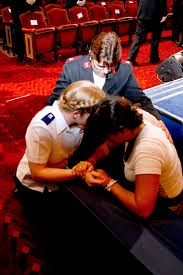
“The early Army sought to bring together the cognitive and affective dimensions of religious life in dramatic ways. In addition to the preached Word, which was central to Army worship, Booth employed various symbols and expressions of eliciting spiritual results. The chief symbol of early Army worship was the mercy seat, which served the psychological, spiritual, and unconscious focus of the worship experience. In responding to the invitation to come forward to the mercy seat, the penitent was encouraged to seek not only instantaneous conversion, but also the indwelling of the divine presence. Hence the mercy seat was more than a place where communion with God was experienced.”[14]
Even though this quotation refers to the early Army, the mercy seat has kept up its central position through the years[15].
The departure from the general practice of the Church concerning the sacraments was originally to a certain degree based on a pneumatological understanding, but the practices that took their place were by no means spiritualistic. They were very concrete – meals with strangers presided over by Christ, the enrollment ceremony for soldiers as a sort of baptism into the body of Christ and the stress on sacramental life of each Salvationists, a life with a very practical, down to earth outcome. In a way diaconia has found its central place as constitutive for being a church. The foot washing in the Gospel of John (13:1-17) as the symbol of diaconia, not as a concrete act of washing feet, has been a central commandment to Salvationists, where the breaking of the bread and the sharing of the cup of the synoptic gospels was the irrefutable commandment for the majority of Christians from the early age of the church.
The reports from the two commissions claimed that Frelsesarmeen had a spiritualistic ecclesiology as it only referred to the invisible church. The report sought to prove that the founders of the Army had not developed any teaching concerning the visible church – only the invisible mattered. To further support this claim, the report used the quotation from Bramwell Booth of being an integral part and element of the Great Church of the Living God (which I quoted on page 2 of my paper). This quotation happened to come from a chapter in Bramwell Booth’s memoirs concerning the visible church. Bramwell Booth wrote about the purpose of Christ to gather his followers in a visible society – “The Society spoken of in the Bible as the Church or Congregation”. He stressed that no specific church order was advocated by the New Testament. The idea of the invisible church was never a part of Bramwell Booth’s exposition, nor of Salvationists thinking. On the contrary, the universal church was considered a visible reality, including very different people and forms.
With their background of the Lutheran Church, the idea of an invisible church within the visible was known to the writers of the report. This was generally understood as meaning the visible church embracing everybody, as in the parable of the wheat and the weeds that “grow together” (Matthew 13: 24-30), while the invisible church was considered the wheat that would be revealed as the true church in the end. The notion of the invisible church within the visible went back to Augustine’s ecclesiology. Those who were baptized and received the sacraments were members of the church, but not all were united to God by true faith and love. There was an inner core of saved that was invisible, because only God knew their inner dimension of faith. They would be the future church of the predestined. The background was the rapid growth of the church during the fourth century after it had been legitimized in the empire. This could include conversions of convenience. The reformers of the sixteenth century also referred to Augustine’s interpretation of the invisible church within the visible, but they gave other interpretations as well, as for instance the wish to include others than those defined by their reforms as true Christians or the true church. The true church existed when the gospel was preached purely and the sacraments administered truly. The invisible church could also refer to Christians united in one faith as distinct from the Roman institutional structures. In contrast, roman ecclesiology did not separate an invisible church from the empirical Roman Church.[16]
Harald Hegstad, who is a Lutheran theologian, argues that, “the belief in the church cannot be understood as a distinction between the visible and invisible church”. Hegstad’s thesis is, “that there is only one church, namely the church as visible and one that can be experienced in the world.”[17] He refers to Matthew 18:20: “Where two or three are gathered in my name, I am there among them” as the kernel of the New Testament understanding of the church, as it was understood first and foremost as a real and visible fellowship of believers. Salvation Army ecclesiology would be much closer to the ecclesiology developed in The Real Church than in the thoughts of the invisible church. Any idea of predestination was opposed in Salvation Army doctrine six: “We believe that the Lord Jesus Christ has by his suffering and death, made an atonement for the whole world so that whosoever will, may be saved” and any uncertainty of being saved was refuted by doctrine eight: “We believe that we are justified by grace through faith in our Lord Jesus Christ and that he that believeth hath the witness in himself.” The church in Salvation Army ecclesiology was the visible empirical church, not an invisible unknown group within the visible church. The claim from the reports that the Army only related to the invisible church was mainly based on a misunderstanding of Bramwell Booth’s arguments concerning the visible church. The other reason for this claim was the influence from the Lutheran perception of the invisible church within the visible, as it was generally understood. With a functional ecclesiology, such as the Army’s, any idea of an invisible church would be foreign. The universal church is not considered an invisible church, but the sum of churches of all kinds around the world. It can be concluded that the Salvation Army does not operate with any idea of an invisible church in its teaching. It considers the church to be a visible actor in the world.[18]
A main challenge for the international Salvation Army to express more clearly its ecclesiology came from the Lima Document[19]. The Army formed a group that worked with a response to the document. The response was sent to all Army territories asking for comments on this and it was sent to WCC in 1985[20]. From the response to BEM it can be concluded that The Salvation Army believed, as a foundation for its ecclesiology, that it “had been raised up by God and was sustained and directed by him”, that the Holy Spirit confirmed this new expression of a Christian community, and that in Christ there was freedom to be different responding in its own voice and culture to the voice of Christ. The notae ecclesiae coming forth were martyria, diaconia, and koinonia as relating to the overall purpose of mission. It considered the church as the people of God based on the calling of the whole people of God. The priesthood of all believers was the foundation for the ordained ministry, a ministry for both men and women. It had its own ceremonies of incorporation into the body of Christ which it considered equal to baptism. It had doctrines in accordance with the classical creeds. It interpreted the Eucharist as all meals being sacramental, remembering Christ and as a sacramental life linked to the social implications of the gospel[21]. This response was translated to Norwegian already a year later. It became important for a number of Norwegian Salvationists.

A Salvation Army ecclesiology, Community in Mission by Phil Needham was published in 1987, but was not translated to Norwegian, so the influence in Norway was restricted. Another eleven years passed before the issue of ecclesiology was addressed again. This time it came out as an official statement in the doctrine book, Salvation Story, a book that would be translated around the world into different languages and which had to be used in teaching of cadets and recruits. Doctrine books therefore had great influence. It was translated into Norwegian within a year of its publication.

Salvation Story influenced Frelsesarmeen in the years just before registration as a faith community. It had a chapter, “People of God”, concerning Salvation Army ecclesiology. It was vital to express a belief in the Church in a tradition and theology, that otherwise could be individualistic and concentrate on the personal experience of faith and sanctification. The Salvation Army had no doctrine on the Church, but all doctrines started with “We believe”, implying that the doctrines belonged to a community of faith. The well-known quotation from Bramwell Booth (quoted on page 2 of this paper) headed the chapter. The image used was the True Vine describing the church as a living organism and the Army as part of this living organism with potential for growth and changes, and able to bear fruit.
The images used in the chapter are the body of Christ as well as the people of God. The significance of the the Army’s name for the community of believers – ‘the corps’- corpus Christi is important in this image of the Church. The concrete and visible is in focus as is underlined by the following:
“We mean that the Church is Christ’s visible presence in the world, given life by the indwelling of the Holy Spirit and called to grow in conformity to Christ.” [22]
There is no room for any invisible church in this understanding of the church as Christ’s visible presence in the world. The Army’s ecclesiology expressed in this chapter was in line with the Nicene signs of the church – the church as unam, sanctam, catholicam, and apostolicam. The church was one, led by the Spirit, with a consensus of interpretation and preservation of the gospel message. It preserved a tradition ‘that originated with the first Christians and their response to the risen Lord.’
In Salvation Story the Trinitarian aspect was underlined more strongly than previously. In could be seen in chapter two, “The God who is never alone”.[23] An outcome of this was a clear focus on the Holy Spirit as the agent for different aspects of the church, visualized in the headlines of chapter 10: the church is created by the Holy Spirit for fellowship, …for healing,…for nurture,….to equip for ministry and mission, the Holy Spirit empowers the church for witness, …for mission. These headings all belong to the two sections called the gathered and the scattered community. The church gathers in order to be sent out. In the Army’s perception of the church these two belong together, they are dependent upon each other as well as upon the agency of the Holy Spirit. The functional aspect of Salvation Army ecclesiology is clear. The gathering is fellowship, healing, nurture, and empowerment, or being equipped for the purpose of mission and ministry to the world. This aspect of mission and ministry is clear in the summary of the chapter:
“We believe in the Church, the body of Christ, justified and sanctified by grace, called to continue the mission and ministry of Christ.”
All three notae ecclesiae of martyria, koinonia and diaconia relating to the overall focus on mission, which was seen in the Army’s response to BEM also appear in this short statement. Koinonia is present in the description of the church as the body of Christ, and martyria, as well as diaconia, in the call to the church to continue the mission and ministry of Christ. Both salvation and sanctification are highlighted in the description of the Body of Christ.
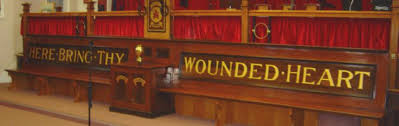
In the chapter on the church the section called the sacramental community stands between the gathered and scattered community. Here I will connect it to the appendix concerning the sacraments, because both the section as well as the appendix show how the terminology had changed over the years in explaining the issue, and how new aspects had been added to explain the Army’s view upon the sacraments. Sacramental living had always been an important aspect of the understanding of sanctification, but the focus had been on the individual, not so much on the community. Army teaching had highlighted the personal experience of the presence of God, and how the sacramental life was lived in the world in the power of the Holy Spirit. In this section the spotlight is on the sacramental community gathered around the source of sacramental living – Jesus Christ, the one original Sacrament – and feeding upon him:
“Jesus Christ is the center of the Church which lives to be a sign of God’s grace in the world. As the sacramental community, the Church feeds on him who is the one and only, true and original Sacrament. Christ is the source of grace from whom all other sacraments derive and to whom they bear witness. He is what is signified in the sign of the sacrament.
As the body of Christ the Church is his visible presence in the world. It is God’s sign (sacrament) of the life together to which Christ calls the world, the visible expression of atoning grace. Rooted in the risen life of Christ, the one and only, true, and original Sacrament, the Church daily discovers, celebrates – and is transformed by – his grace. It gathers around Jesus Christ, lives by faith in him and is blessed to be his sacramental community.”

By combining the sacramental life, which used to have more individualistic notion, with the sacramental community it embraced fellowship as well as mission and the personal life of holiness. By using the significant meaning of Christ as the original sacrament, it took hold of sacramental language and an image it could connect to, and from which it could explain Salvation Army practice. In contrast to Catherine Booth’s (the co-founder of the Army) reluctance to convey any importance to visible signs, it underlined the value of celebrations and stated:
“Celebrations are needed in the life of any community, and celebrations of new life in Christ are needed in the life of the Church….Celebrations and rituals can be vehicles through which the Holy Spirit brings renewal and hope to the fellowship of believers.”
On basis of such a change, it could be questioned whether the nonobservant status would be altered. This did come up as an issue, but was not the eventual outcome, rather this focus on the importance of celebrations and rituals became foundational for other developments of Salvationist understanding of its own practice as an expression of the sacraments. It just stated the experience of a hundred years of living as a faith community, an experience expressed in this way:
“We are a sacramental community because our life, our work, and our celebrations center on Christ, the one true Sacrament. Our life together is sacramental because we live by faith in him and our everyday lives keep stumbling onto unexpected grace, his undeserved gift, again and again.”
The appendix showed that the Army took hold of the word sacrament and made it part of Salvationist experience, interpreting it in a way that it covered the Army’s non-sacramental practice. The interpretation of what a sacrament meant, connected with Salvationist practice and confirmed Salvationists that their experiences were valid, not something strange or second-rate in comparison to the experience of Christians from other traditions. The apologetic tone had disappeared and a confidence rooted in Salvationists’ experience was visible in this chapter. The stress on experience as a credible basis for decisions in matters of faith had been central from the Army’s beginnings and was evident here. At the same time as the Army highlighted and confirmed its own experience it identified with the Church universal and claimed to be part of it.
The Salvation Army’s non-observant position concerning the sacraments has not been openly opposed through Frelsesarmeens’ history in Norway, which cannot be a surprise in view of the translations of the doctrine books[24] up to 1975, when the translation included the Army’s non-sacramental view for the first time. The silence during all these years concerning the Army’s position would not call for reflection on matters not generally known. Because of the 1975 translation the situation in 1996, when Frelsesarmeen’s Church Commission gave its report, was different. The Army’s position was generally known, and at a time of registration as an independent faith community was seemingly close to becoming a reality. Therefore, the non-observance of the sacraments was questioned.
The results from the questionnaire from Frelsesarmeen’s Commission 1975-78 did not reveal any strong beliefs concerning the sacraments or a wish for an observance within the Army, rather a practice that accommodated them to the general religious culture of the country. Twenty years later in 1996 the question of the sacraments came up. Seemingly a change in attitude had happened from 1978 to 1996. The change could rest on the publication of the 1975 translation of the Doctrine Book. A period of twenty years would most probably have given most Salvationists some insight to the Army’s position. A brochure with three options for the Army’s future registration was sent out. When the results came in from the different corps around the country 24 out of 45[25] corps raised the question concerning the sacraments, in spite of this not being an issue in the questions. The two main issues were: 1) It was difficult to see how Frelsesarmeen’s non-observance could still be the case, when it registered as an independent faith community. Apparently sacraments belonged to the being of the church. 2) The Salvation Army’s position of non-observance had to be taught more clearly.
In these two statements there are ecclesiological tensions. The group that wanted clear teaching would most probably identify Frelsesarmeen as an independent faith community as it presently was. Its characteristics had to be highlighted. The other groups most probably had been influenced by Lutheran ecclesiology on the true nature of the church – the gospel preached purely and the sacraments administered truly. There were comments on the importance of the sacraments, but also indifference to the actual observance of them. What they had in common was that the sacraments had to be present in order to be a church. As there were no specific comments from all the 24 corps identifying why the sacraments had to be discussed, it was not possible to identify the percentage of these positions, only that attitudes were present from belief in the importance of the sacraments in order to be a proper church to the Army’s position of non-observance that needed to be taught more clearly. There was a tension within Frelsesarmeen having these two positions. The position of having the sacraments in order to be a church need not exclude Salvationists faith, nor an attitude to the sacraments as symbols.
All this happened before the publication of Salvation Story, so the new approach to the sacraments where the Army interpreted its own celebrations in light of them was not known. As Salvationist faith has been dominant in Norway among Salvationists throughout its history, this new approach of taking hold of the concept of sacraments as part of Salvationist practice might have had an impact, had it been ready at this stage. However, when the actual registration took place in 2005 there was still an expectation by a few officers that the introduction of the sacraments was a natural outcome.[26] Some tensions were still present concerning what constitutes a real church based on the double membership of the Lutheran Church and Frelsesarmeen.
From a comparison of what is constitutive for The Salvation Army for being a church with the Lutheran it is clear that two different traditions are at stake. The Lutheran tradition focus on orthodoxy compared to Salvationist tradition where orthopraxy is as important. The visible concrete expressions of martyria, koinonia, and diaconia are vital. The preaching of the word has to be based on the Bible and be true to Christian doctrines, but as important is the expectation that the interpretation of these comes to life through personal experience and testimony. There is focus on freedom in the Spirit, and the fellowship is vital for discipleship and mission. Diaconia is based on the sacramental life, that is challenged by the foot washing, to be servant of all. William Booth considered the Bible as an important means of grace, but even so he saw the greatest value of the Bible when it was translated into the lives of Salvationists:
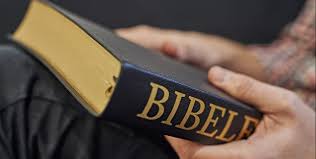
“I want to see a new translation of the Bible into the hearts and conduct of living men and women. I want an improved translation – or transference it might be called – of the commandments and promises and teachings and influences of the Book to minds and feelings and word and activities of the men and women who hold onto it and swear by it and declare it to be an inspired Book and the only authorized rule of life…it is no use making correct translations of words if we cannot get the words translated into life.”[27]
This illustrates the focus on orthopraxis.
Conclusion
Frelsesarmeen had during its history in Norway accommodated itself to the country, and especially to a context of a Lutheran State Church. By abandoning the possibility of being dissenters it cooperated with the State Church and adapted as far as it was necessary for the sake of its overall goal of mission. The vast majority of Salvationists kept their membership of the Norwegian Church, for most a nominal membership, and brought their children to the church for baptism. It benefitted from this situation in movement growth, in acceptance from the general public as well as the State Church and public authorities. This situation was expressed by economic support for its work and open doors for its mission.
What was originally an accommodation – the translations of doctrine books in 1901 and 1930 – into the situation of a dominant State Church developed into a tension in ecclesiology between Frelsesarmeen and The Salvation Army and within Frelsesarmeen. For some Salvationists the notae ecclesiae of martyria, koinonia, and diaconia as relating to mission the Army considered as essential and constitutional for being a church were sufficient, but for others, the importance of the sacraments for being a church was evident. The three important signs of a church would be supported by all Salvationists. But the question remained as to whether they were enough to be a true church. However, it also made clear a tension between those who agreed with the Army’s position concerning ecclesiology and those who amalgamated what was essential to Lutheran ecclesiology.
Could they be called Lutheran Salvationists?
The paper is built on my recent book, Lutheran Salvationists? published by Wipf&Stock in March 2017. The book began as a doctoral dissertation which I defended at Oslo University in June 2015. I have revised and shortened the dissertation.

Bibliography
Barnes, Cyril J. ed. The Founder speaks again A Selection of Writings of William Booth. London: Salvationists LTD, 1960.
Booth, Bramwell. Echoes and Memories. London: Hodder&Stoughton, 1925.
Furseth, Inger. “Civil Religion in Low Key: The Case of Norway”.
Acta Sociologica 1994 no. 37, 39-54.
The General. Response from The Salvation Army to Baptism, Eucharist and Ministry
Faith and Order Paper no. 111
The General. Salvation Story. London: IHQ, 1998
Haight, Roger S.J. Christian Community in History Historical Ecclesiology. Vol. I-III. New York:
Continuum International, 2004, 2005, 2008.
Heathcote, Wyndam. My Salvation Army Experience. London: Marshall Brothers, 1891.
Hegstad, Harald. The Real Church An Ecclesiology of the Visible. Cambridge:
James Clarck&Co., 2013.
Lydholm, Gudrun Maria. Lutheran Salvationists? Eugene, Oregon: Wipf&Stock, 2017.
Nicol, Alex M. General Booth and the Salvation Army. London: Herbet and Daniel, 1911.
Repstad, Pål. “Civil Religion in Modern Society”. Kirchliche Zeitgeschichte 1995 Heft 1.
Rightmire, R. David. Sacraments and The Salvation Army. Pneumatological Foundations.
Metuchen, NJ: Scarecrow, 1990
Sundback, Susan. “Medlemskapet i de lutherske kyrkorne i Norden”.
In Folkkyrkor och religiös pluralism Den nordiske modellen, edited by Gustafson,
Göran and Thorleif Petterson. Stockholm: Verbum, 2000
World Council of Churches. Baptism, Eucharist and Ministry Faith and Order
Paper no. 111. Geneva: WCC, 1982
[1] Frelsearmeen is the Norwegian name for The Salvation Army
[2] Alex M. Nicol, General Booth and the Salvation Army, 85
[3] Bramwell Booth 1925 Echoes and Memories, 79
[4] Lydholm, Lutheran Salvationists?, 191-206
[5] Sundback, ”Medlemskapet i de lutherske kyrkorne i Norden” ( Membeship of the Lutheran Churches in the North), 34-73
[6] Furseth, ”Civil Religion in Low Key”, 39-54
[7] Repstad, ”Civil Religion in Modern Society”
[8] Ibid., 168
[9] They are the only ones I have been able to trace through their addresses and compare them with the census in 1900 and again in 1910
[10] Lydholm, Lutheran Salvationists?, 42-45
[11] Ibid., 67-69,
[12] Rightmire, Sacraments and The Salvation Army, 107-117
[13] Heathcote, My Salvation Army Experience, 69
[14] Ibid., 65
[15] Lydholm, Lutheran Salvationists, 209-210
[16] Haight, Christian Community in History Vol. III, 185- 88
[17] Hegstad, The Real Church, 2
[18] Lydholm, Lutheran Salvationists, 210-13
[19] World Council of Churches, Baptism, Eucharist and Ministry Faith and Order Paper no. 111
[20] The General, Response from The Salvation Army to Baptism, Eucharist and Ministry Faith and Order Paper no. 111
[21] See Lydholm, Lutheran Salvationists, 213-17
[22] The Doctrine Council, Salvation Story, 100-15
[23] Ibid., 14-22
[24] Frelsesarmeen had used a policy of translation very different from the other Nordic ountries. The first doctrine book in Norwegian was published in 1901 and was a translation from the Army’s first doctrine book in 1881, when the Armys still administered the sacraments, and therefore had some paragraphs concerning the sacraments. This was done in spite of several newer doctrine books. In 1930 a translation of the 1923 doctrine book was published. In this book there was an appendix explaining the Army’s non-observant postition. This appendix was never included in the Norwegian transaltion.
[25] Not even half the corps in country answered the questions.
[26] This is based on one example of a corps officer who had ordered a chalice to the corps, because she knew registration was on its way and expected sacraments to be observed in the faith community.
[27] Barnes, The Founder Speaks Again, 198
 Salvationist viewpoints