The history of the Salvation Army in Finland is rich and dramatic as the history of Finland itself. This article does not concern the general history, but has a focus upon personal experiences of Finnish officers as it was expressed in a questionnaire[1]. It concerns their first encounter with the Army, their relationship to the Lutheran Church and their recollection of the ceremonies of the Soldiers Enrolment as well as the Officers’ Covenant and Commissioning. It is a little, but vital part of the officers’ memoirs even though it just concerns these specific areas. 54 officers answered the questionnaire, so the research is built upon these.

The officers’ answers to the questionnaire reveal something about the impact of the Army’s mission strategy as well as its understanding of incorporation into the body of Christ, and its understanding of its ordained ministry, its officers. It also shows the strong impact of the Lutheran Church upon Salvationists both as a cultural as well as a religious influence. As the majority of Finnish officers are first generation Salvationists with no family connection to the Army their adherence to the Lutheran church also gives an insight into the relationship between the general population and the church, in its role as the civil religion of Finland[2].
The impact of the Army’s mission strategy
Looking into the questionnaires it is clear that it was the Army’s presence, open doors, meetings and programs that attracted people. Some just passed the hall, heard music and singing and went in to see what it was. These were especially young people during the time of studies and education, of whom some were invited by friends to come with them to experience this. A couple of young people came to a Home League meetings as the first encounter. Young women being employed in the Army, especially the kindergartens or nurseries experienced the officers working there as role models and found way to the Army’s meetings. Only one met the Army through an open air meeting, one through a War Cry seller and one by seeing a Salvationist on the street, so it was not the Army’s conscious mission strategy of reaching out into the public square that really succeeded in new members, rather it was just being present, having an active and open program and a hall. 5 of the respondents had felt an inner urge to seek the Army, one experienced this call in a vivid dream having no idea of what the Salvation Army was, but she as the others obeyed this inner call. 3 others had been seeking a Christian fellowship and asked God for guidance and found the Army this way. One man in his thirties had lost family, work and his flat due to alcohol abuse, but some of the homeless people advised him to seek the Army’s shelter. He did and after some months the Army provided him with work and a place to live. He became a soldier and an officer. However, the largest group (22) had met the Army as children or teenagers through Sunday School, Scout work and other youth activities. A number of them had been brought there by their mothers or relatives, by neighbours or school mates.
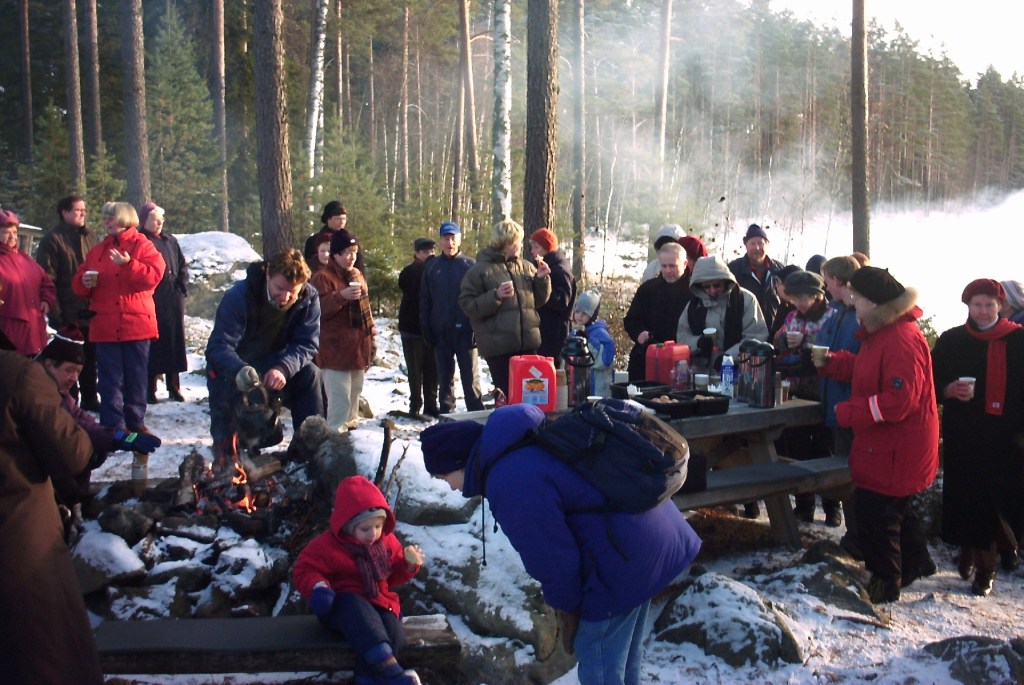
When I look at the age at which the officers met the Army, it happened in their childhood, youth or younger adult years for the vast majority – 20 came as children before the age of fifteen, 11 in their teens before the age of twenty, another 20 came in their young adult years at the age between twenty and thirty. Only 2 were between thirty and forty years and one was over forty, when they met the Army. This illustrates that the Army as part of its ministry had solid youth work that could attract and keep the children and young people. It also illustrates that children and young people were (are) more open to influence and new things than later in life. It is interesting that the number of officers who connected to the Army as children was the same as those who came in their young adult years. For 3 of the officers the Home League had been the first encounter in their youth, this illustrates that the welcoming spirit and inclusiveness had profound value. It did not stand alone as there were youth programs as well or at least other young people in most corps.
When it comes to family connection to the Army the majority – 32 – had no such connections. 9 of them had one parent or both who were soldiers and another 9 had parents that attended Army meetings now and then, 2 had relatives who were either soldiers or officers. This gives evidence to the fact that the Army has attracted a number of people from outside Army circles, but it also indicates that only few of the children of officers and soldiers pursued a life as officers.[3]
Looking into the age of the officers it is clear that the answers for the large majority reflect the Army’s mission years back as 6 of the officers were born in the 1920s, 17 in the 1930s and 22 in the 1940s, 5 were born in the 1950s, 2 in the 1960s and 2 in the 1970s. The stories of the 4 who were born in the 1960s and 70s did not differ very much from the majority of the others. One came with his parents when he was 7, as they were seeking a Christian community, another came to the Army at the age of 17 through a school mate and attended youth meetings, the third came at the age of 18 as a student attending bible studies and Home League and the fourth was 28 years of age (there is no story or remarks on how she met the Army, only her age).

It mainly shows that the Army’s mission in the 1940s, 50s and 60s attracted more people than later on. There were programs for children and youth, a number mentions scouts as well as youth nights, apart from Sunday schools. There seems to have been week night meetings, Sunday service as well as Home League. The four who grew up in the 1970s, 80s and 90s do not differ from the majority of the older ones in age when they met the Army or how they came in contact with the Army. The programs they attended did not differ either. It was still the Army’s presence and open doors that attracted them.
The fall in numbers of people linking up with the Army indicates that the Army’s presence and programs did not work as well as a mission strategy as was the case earlier on in a changing society. This experience does not differ much from the experiences of other churches[4] The general secularization of people and society had influence, because it meant that the traditional way the Army worked in order to reach out to people in the towns through indoor and outdoor meetings did not get the same response as earlier. The message seemed not to be as relevant for people’s lives as the resonator for the message of salvation/conversion had lost its base. The general secularization affected the number of ordinary people so they turned away from a belief in God and from practicing their faith by attending places of worship, or fulfilling the religious routines of everyday life such as devotions or grace before a meal. This could also include ceasing to interpret their lives, their moral, spiritual, and religious experiences in the light of the values of the Christian faith[5]. There were great changes in society during these years that offered a variety of entertainment and influence such as the TV. Later came the internet and today different social media dominate especially young people’s lives.
Even though a different mission strategy is needed today to call attention to the Christian message as it is preached and practiced within the Army, it is still vital for the Army to be present with open doors and different programs.
The Soldier’s Enrolment – incorporation into the Body of Christ
The questionnaire from 2004 had a question concerning the Soldier’s Enrolment, simply what this ceremony had meant for the officers, what it had signified. Everybody answered this question with words that underlined that it had been an important ceremony for them with great significance for their life and faith.

11 were using words as commitment, binding promises, sealing a covenant, 10 of them described the actual ceremony as a mighty experience, a solemn moment, a holy moment, a day of joy and fulfilment, a celebration, a valued experience, a great event that meant a lot, an assurance of being part of something greater. 10 underlined the Soldier’s Enrolment as God’s call to them and one called it a transition to becoming a conscious Christian, 4 others describes it as a public confession of faith, 9 underlined the possibility of serving God through this ceremony and 2 used the word surrender – surrendering to God. Only 4 mentioned the uniform as a help to testify to the Christian faith and something great to be wearing for the first time, or as a holy garb that protected against falling into sin. Some other expressions were: a confirmation, a serious step, something holy, another baptism, something that cannot be deleted from my life, something that helps and binds me, a change in life, a separation from the world.
The following direct quotation can stand as examples of how much the ceremony had meant to the respondents at that stage and how clear they still remembered it:
“I really experienced a call to soldiership. I can still remember the excitement I felt throughout the day being on the ward among the patients. It was a day of joy and fulfilment. I remember the time before and after as the time of the first love.”
“A solemn moment where all became clear for me. It was possible in a visual way to belong to the Army. It was a serious choice, and of all my heart I gave myself to be a soldier. I experienced to be saved to save. I sealed my covenant to be at God’s disposal.”
“It was a great event, which has stayed in my memory, in spite of the fact that I at this time did not know where it would lead me. I consciously placed my life in God’s hands. The meaning of it all became even greater, because my mom went to the mercy seat to pray and once more to join the Army.”
It is clear from the answers that the Army’s way of incorporation into the Body of Christ, the Soldier’s Enrolment has been a significant event. It was a day that marked their lives as a solemn moment of commitment, an event that made a line of before and after. It was a once in a lifetime experience. As all the respondents were officers they had conducted this ceremony several times throughout their lives, therefore their answers also give an insight into how they communicated the meaning of the Soldier’s Enrolment to people seeking membership in the Army, and perhaps also, how much effort they themselves placed in conducting the ceremony.
Later in their lives all had experienced being ordained and commissioned as officers, but still the Soldier’s Enrolment stood out in their memory as something significant.
Covenant, ordination and commissioning of officers
Even though the Soldier’s enrolment stood clear in their minds as a very important event, the covenant, ordination and commissioning gave more comments and reflection. Officially the Army has underlined that officership is just another function, but reading the answers gives another impression and so does the way the Army highlights these ceremonies. There is a clear transition from soldiership to officership coming through the answers and actually through the ceremony itself.
18 of the respondents unlined the covenant meeting as something exceptional, serious and powerful, the most important experience in life. One wrote :”I often remember this occasion and read the promises again. I committed myself to the task God had given me.”
9 felt that the ordination gave them authority as spiritual leaders (authority was one of the questions). 11 did not feel that the ceremony gave any authority, they felt hesitant, uncertain or insecure concerning the task. They felt that authority was not given through a ceremony, but through good leadership. One wrote about God as the source of power in her life and therefore it was God’s authority in her life which meant that she lasted in her service. Another one explained how this with authority was becoming clear little by little, and how she had experienced the difference in being a soldier and being an officer. Yet another didn’t really know, but perhaps you could talk about authority, being given authority and right to act as an officer for God and people. A seal of the promise given.
Descriptions of the whole event were expressed as something exiting, an all-embracing surrender to God, something that supported the meaning of the task, something holy and binding, something that filled one with trembling, a holy time where the presence of God was very strong. The following four direct quotations can stand as examples of the various answers:
“The ordination and the covenant which we signed on our knees have been the greatest experience in my life. It gave authority and a total surrender to God and The Salvation Army”
“The ordination and the covenant meeting were and are the most important experiences in my life. At the ordination I was dedicated in an all-embracing way to work in the kingdom of God. The ordination and the covenant have also committed me to live in accordance to the will of God. In situations of choice in my life they have led me to the decisions I have taken”.
“It was a sealing of the promise to serve God all my life, ever memorable in every sense. The ordination is totally unique. The covenant meeting was very solemn and God’s greatness and mercy was revealed when he took this little human being into his covenant. I can’t say anything about authority.”
“The promise at the covenant meeting had great importance for me personally. Perhaps I could say that it was an eternal and final dedication to God and The Salvation Army. This was how I felt at that time and I still feel like that.”
The answers underline how important the ceremonies were for the officers’ identity and service. It signals much more than taking upon another function. It seems to be something that has marked their lives profoundly and has been decisive in times of uncertainty and choice.
Conclusion
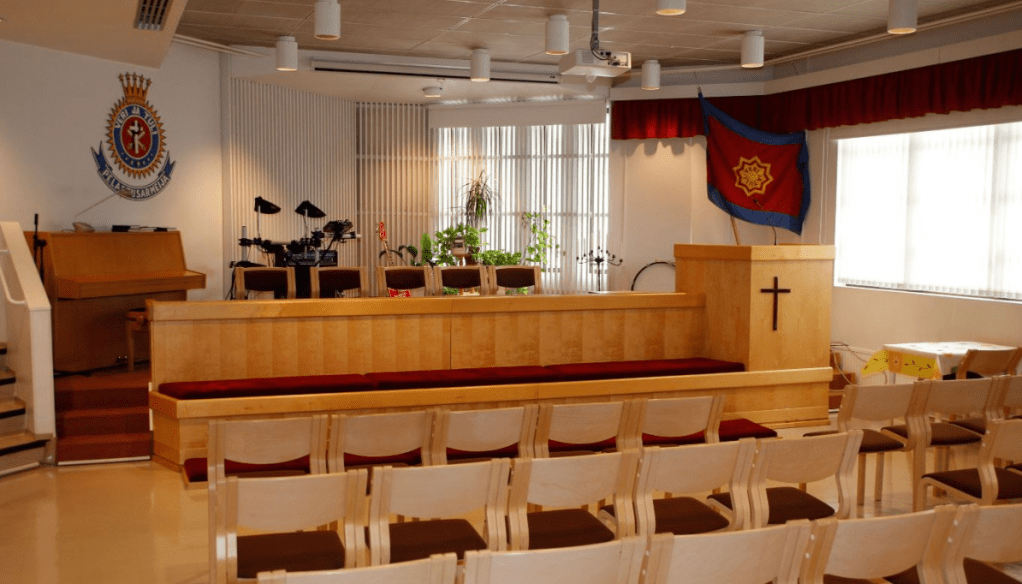
The questionnaire is sixteen years old and a number of things have changed since then for example the percentage of officers who are members of the Lutheran Church. In 2004 it was 90% while it was only 50% in 2017. This could signal a stronger ‘church’ identity as a growing number of Salvationists are considering the Army alone to be their church. The bonds to the Lutheran Church through participation in communion is still there but to a lesser extent than 16 years ago. The impact of the Army’s mission depends also on society not only on the Army itself, but the result from the questionnaire tells that a relevant programs and an open door are essential. The image of the officer corps today could indicate that there has been an impact of the Army’s mission strategy in recruiting new people. A new generation of officers have appeared during these 16 years, so the average age of active officers is considerably lower than 16 years ago, and it is an officer corps of captains and lieutenant with a few majors that are close to retirement.
It would have been interesting to hear the stories of this new generation, both in how they met the Army and how they personally experienced their enrolment as soldiers as well and what their thoughts were on covenant, ordination and commissioning. For the generations who answered the questionnaire these two ceremonies were of utmost importance for their lives, and a dialogue on this issue could reveal if this is still the case. This little paper might inspire some of the officers to share their stories both with each other as well as with the broader Army in Finland. The findings from the questionnaire concerning the age of people when they met the Army can stand as an inspiration to keep focus on work for children and youth.
Society and the challenges for the Army from it do change during the years, but the testimonies we can get from history can inspire and challenge us.
[1] It is build on a questionnaire from 2004 which I sent out to Finnish officers, active and retired. I received 54 answers out of 140 questionnaires. The questions concerned how the officers had met the Army and at which age, the membership of the Lutheran Church and their experiences of the ceremonies of the Soldiers’ enrolment as well as Commissioning as officers.
[2] See the research of Susan Sundbeck for instance: ”Medlemskapet i de lutherske kyrkorna i Norden” In Folkkyrkor och religiös pluralism. Den nordiske religiöse modellen, edited by Gustafson, Göran and Thorleif Petterson. Stockholm: Verbum, 2000.
[3] I do not have any research that could give an overview of how many Salvationists’ children who became soldiers.
[4] See McLeod, Religion and the People of western Europe 1789-1970
[5] See Lydholm, Lutheran Salvationists?,54
Featured Image: Uniforms through the ages.
 Salvationist viewpoints
Kiitos/ tack så mycket
LikeLike