Introduction
The theme ‘a balanced curriculum’ demands that we have a clear picture of what it is going to be balanced against. What is the aim of this curriculum? What sort of officers do we want to foster?
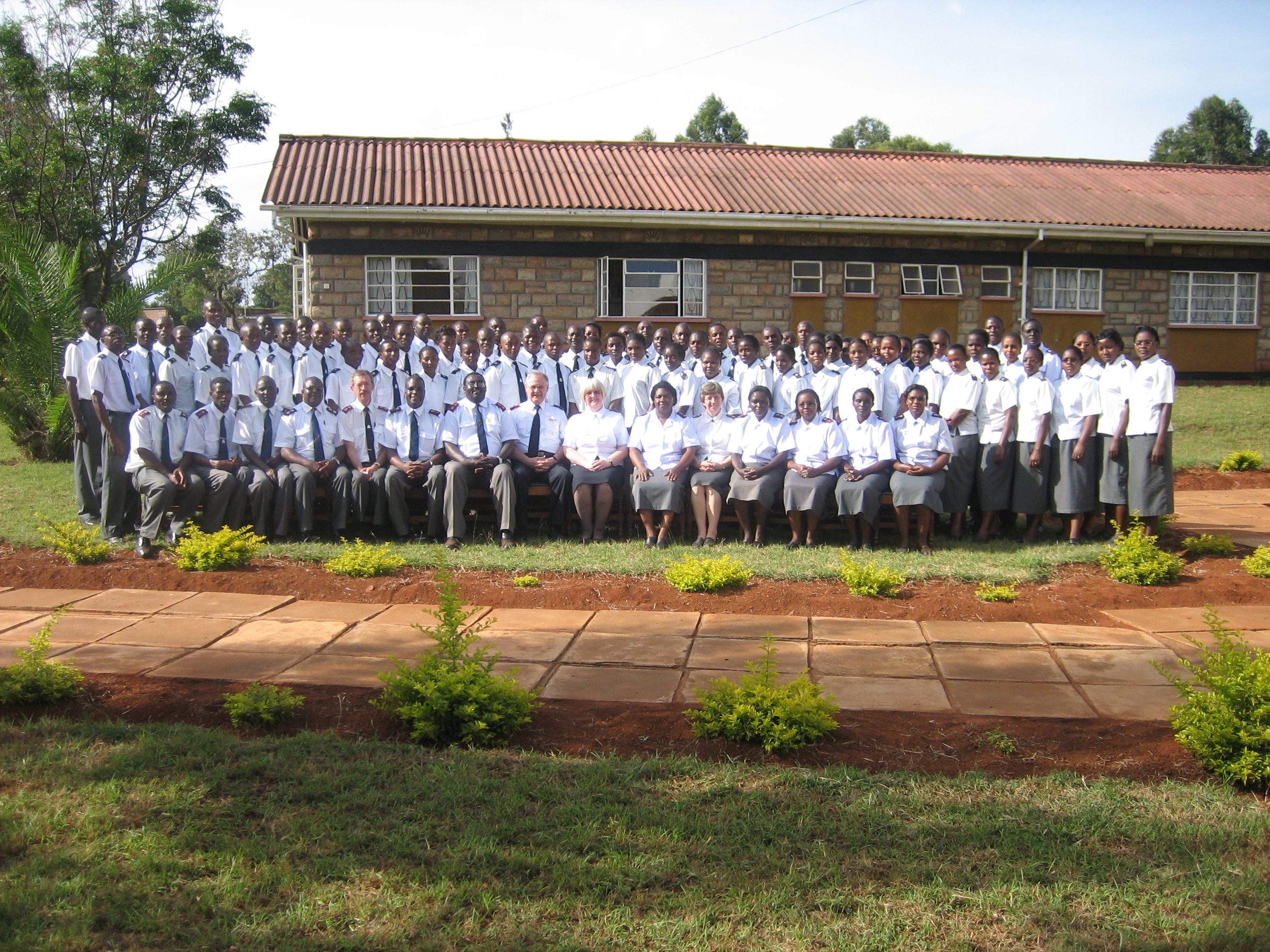
When I prepared this reflection I asked the training staff in Oslo to give some reflections, just a few lines of what they considered the essentials of officer training in order to reach a balanced education. I got answers from all four of them. During a car ride to a corps visit I asked a Divisional Commander what sort of reflections he had done with his experience of receiving new officers in his division as background for this. Even though it was just an informal conversation it still gave some thoughts.
The answers differed from each other within the training staff and even more from the Divisional Commander who focused very differently. It was helpful inputs.
I have seen or been involved in different forms of officers’ training: 1) The Russian Training College placed in Finland – 2 years residential training; 2) Planning and making the curriculum for a purely flexible training in Finland/Estonia regarded as a 3 year training, and 3) The mixture of residential and flexible training in Norway (some cadets are purely on flexible training, some purely residential and some have a period as flexible and a period as residential. 4) Adding to this the continuing education I was in charge of in Russia/ Eastern Europe for officers who had been through a limited training period – for some as short as six months. All forms have given fine officers and some not quite up to standard. The conclusion is, that each model can be used successfully, if there is quality in the curriculum and in the people concerned – cadets as well as training officers/personnel.
When we have been together with a group of Divisional Commanders often the same question is asked: What are they learning at the training college? The expectations to officers (and that covers newly commissioned officers as well) are high and extensive. No curriculum can cover an education that broad. It is impossible to send fully trained officers out from the college (as it will be in all educations – teachers, nurses and doctors are not fully trained, but qualified). The aim is to send qualified and commissioned officers out from the college who will be in a lifelong learning/training.
The cadet and the ‘toolbox’
The aim of the training is to equip the cadets with tools that can help them fulfil their calling as officers. I see the cadet as a person and the creation of a toolbox as the main objectives of the curriculum. During the training period in whatever form it takes, these two objectives should be integrated.
1) The cadet should have the main focus and the personal development should be central in the curriculum:
Spiritual formation – development of personal spiritual life. This includes personal and corporal prayer life. It has to be taught and learned, taught by personal example and mentoring from the staff, and learned by time set aside daily as well as days or nights marked for this. Prayer books, prayer journals, and prayer partners are all very useful and inspiring. It is fine when prayer rooms are arranged at the college. Preferably they should be open 24 hours. Part of the spiritual formation is to get to know one self. Mentoring is important here, this includes both time with a professional trained person and with the personal mentor chosen either from the staff or from the officer corps.
The teaching of spiritual disciplines is important including use of the Bible as a personal devotional book, and not only a study book or as material for preaching and teaching.
The spiritual formation of the cadet is easier to achieve during residential training, but with keeping this as a main focus it can be done during flexible training, but it needs to be followed up and the cadets must be made accountable for their development.
When it comes to the curriculum it has to be seen all through as a focal point of the education.

Intellectual formation – development of personal intellectual life and capacity. All the teaching of the different subjects, assignments, exams and evaluation of these helps towards this end. The level of teaching has to be such that all are stretched intellectually. Most cadets can enjoy the same teaching, even though some might struggle a bit, but the assignments and the exams can differ according to the cadets’ intellectual capacity and possibilities.
The aim of the teaching is to give the cadets a taste of the different subjects, to show them glimpses of the rich world of learning, to encourage or create a hunger for learning and for engaging in an intellectual development. There is need for intellectual mentoring and for the freedom to express thoughts and ideas that might be unorthodox, but which can be argued for or against –it is fruitful when there is an atmosphere that facilitate for this to happen. The result of the intellectual formation will hopefully be officers in a lifelong learning process intellectually.
This formation is independent of what sort of training, residential or flexible, that has been chosen.
When it comes to the curriculum this has a strong position because all the subjects taught work towards this end.
Character building – This belongs to the early childhood, later childhood and adolescence. The cadets are not in that category, most of them are rather mature. Still it needs to be part of the process and curriculum, as development is possible all through life. It could come under the heading – holiness instead of character building.
The spiritual disciplines, the intellectual discipline can help towards this, as well as the discipline of steering time. Dialogues on different ethical issues, on economic issues, on attitudes to other people, on work ethics can have an impact on the character.
I think the residential training comes stronger out in this area, because this process goes on all the time and the dialogues are not only as part of the official curriculum, but can happen over a meal or during a practical assignment. The flexible training with the challenge from the appointment can achieve this as well.
The capacity to love – or to enter a life of holiness. Holiness is to develop this capacity – the love of God and the love of people. The spiritual disciplines help towards this end.
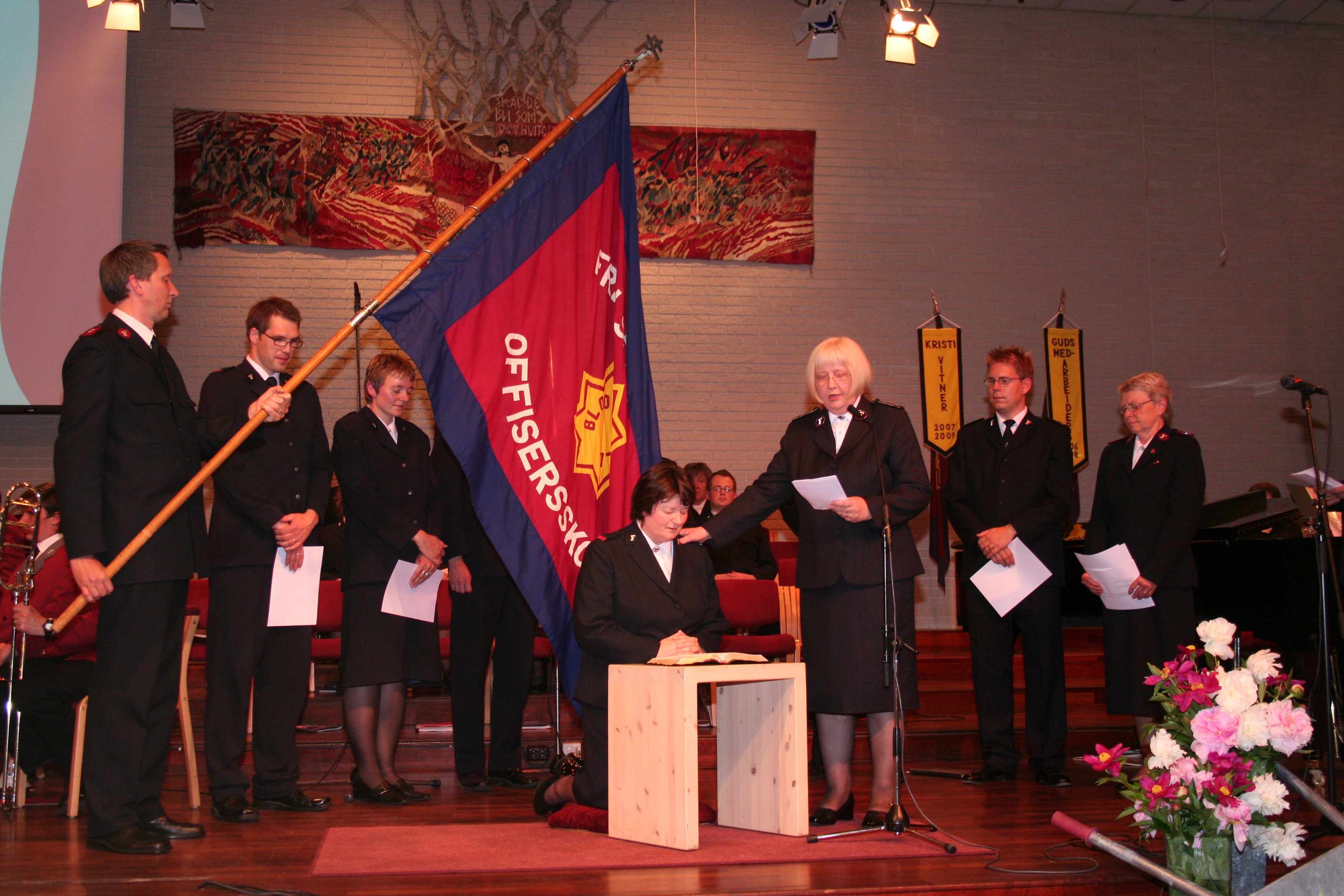
The love of people that is foundational for any officer’s ministry can be encouraged and developed during training, for instance in the practical part of the training, being with people either in social institutions, or in corps work, but also in the communal living at the college. It is so important to see people, reach out to them and show care and interest. All need this both being in the public square evangelizing and contacting people or when in dialogue on different subject, when listening to life stories or just showing interest in peoples’ personal situation.
Mentoring from the training staff, from other officers outside the college, role models from different sources is paramount. To see the love of people being reflected in officers, in stories from their work, in the way they use their time, in practical deeds all this is stimulating for a development in the capacity to love.
As part of the curriculum it is stimulating to have officers (retired and active) come in just to tell their life story. It is a strong teaching tool towards this end.
2) The toolbox
During training a number of tools must be given or formed. The tools of how to do things or the keys to finding material ( libraries, Google etc.) or keys to open up treasures are the most important.
The subjects within the curriculum can never be fully covered and half of it will be forgotten anyhow. That doesn’t mean that subjects shouldn’t be taught, but that the creation of the tools should be in forefront.

Together with newly commissioned officers in Denmark
Biblical knowledge is foundational – how to interpret the Bible, how to read it, how to apply it for today, how to dig deeper into it, how to preach from it. To communicate the importance of the Bible, the respect for its authority independent of liberal or conservative approach to it. These aspect should be part of any teaching in biblical knowledge.
Doctrines – how to interpret them and apply them for today. How are they in relation to the classical creeds and other churches’ doctrines.
SA history ( and Church history) to underline the importance of history, not only as knowledge but also as tools for our work and development today. It can be time well spent to search for the history of the corps or social institution. It can become inspiration for today.
These are at the forefront, but a lot of other important subjects are on the curriculum and they will be part of the toolbox. An equally important part of the toolbox should be tools of how to communicate with people, how to communicate with our world today, how to understand it, how to get insights and knowledge about our time and culture.
All these tools need to be developed and extended all through officership and life.
Conclusion
The curriculum should be balanced between the personal development in all its aspects and the making and building the toolbox.
Often the discussion is on balancing the curriculum between the theoretical teaching and the practical training. I do not see the main focus of the balance here, but on the balance between the two mentioned above. The development and teaching in these two areas are achieved both in the classroom, in community life and out in practical training. These three teaching arenas are there, but it will vary how much time each of these are allotted depending of what sort of training is chosen – residential or flexible. I have experienced the value of both.
The period of transition from being a cadet to a commissioned officer is (in my experience) easier for those in flexible training, because of their experience from the ‘real’ world. That experience cannot be achieved however much practical training is given.
It can be discussed whether a 2 year residential or a 3 year flexible training is enough. It is not enough if the expectation is that fully trained officers are the result. I think it is possible within the time frame to begin a fruitful personal development and to create a useful toolbox, which has to be in use and be expanded for the rest of life. It is after you have passed your driver’s licence that you learn to drive. It is after commissioning that you learn to be an officer.
 Salvationist viewpoints